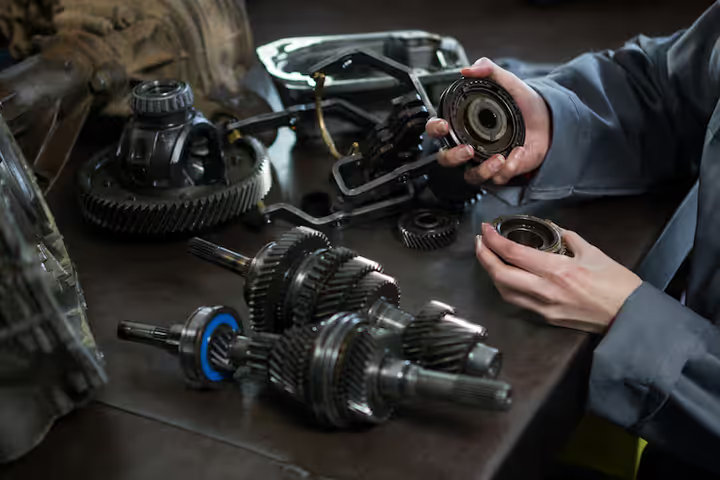
A Complete Guide to Industrial Spare Parts for Businesses
Industrial spare parts are replacement components used to maintain, repair, or restore machinery and equipment in industrial environments. These parts exist to support the continuous operation of manufacturing systems, utilities, logistics facilities, energy plants, and infrastructure projects. Over time, mechanical wear, operational stress, and environmental exposure cause components to degrade. Spare parts ensure that equipment can continue functioning without requiring full machine replacement.
Industries rely on a wide range of spare parts, including mechanical components, electrical modules, hydraulic elements, and control system parts. Common examples include bearings, seals, valves, motors, sensors, and drive components. The availability of industrial spare parts allows organizations to extend equipment lifespan, maintain operational stability, and reduce unplanned downtime.
In modern industrial systems, spare parts management is closely linked with maintenance planning, asset lifecycle management, and production reliability. As industrial operations become more automated and interconnected, the role of spare parts continues to expand in complexity and importance.
Importance: Why Industrial Spare Parts Matter Today
Industrial spare parts play a critical role in today’s industrial ecosystem, particularly as global production systems become more technology-driven and time-sensitive. Even minor component failures can interrupt production schedules, disrupt supply chains, and affect overall operational performance.
This topic affects a wide range of stakeholders, including plant operators, maintenance teams, engineers, procurement departments, and compliance officers. Spare parts help solve several operational challenges:
-
Reducing equipment downtime and production interruptions
-
Supporting preventive and predictive maintenance strategies
-
Enhancing workplace safety by maintaining equipment integrity
-
Improving energy efficiency through properly functioning components
-
Extending the usable life of industrial assets
Industries such as manufacturing, energy, water treatment, mining, transportation, and construction depend heavily on spare parts to maintain continuity. As machinery becomes more specialized, the need for accurate spare parts identification and documentation has increased.
The growing focus on operational resilience and risk mitigation has further emphasized the strategic role of spare parts in industrial planning.
Recent Updates: Trends and Developments in the Past Year
Over the past year, several notable trends have influenced the industrial spare parts landscape.
One significant development in 2025 has been the increased use of digital inventory management systems. Many organizations have adopted cloud-based platforms to track spare parts availability, usage history, and lead-time forecasting. This shift supports data-driven maintenance decisions and reduces excess inventory.
Another trend is the integration of predictive maintenance technologies. Sensors and condition-monitoring tools are increasingly used to identify component wear before failure occurs. This approach allows spare parts to be prepared in advance, reducing emergency maintenance scenarios.
Additive manufacturing, particularly industrial-grade 3D printing, has also gained attention for producing low-volume or specialized spare parts. While not suitable for all components, it has shown potential for reducing dependency on long supply chains.
Sustainability has emerged as a key consideration. Many organizations now focus on remanufactured or refurbished components to reduce material waste and support environmental objectives, especially in heavy industries.
Laws and Policies: Regulatory Considerations
Industrial spare parts are influenced by a range of laws, standards, and regulatory frameworks that vary by region and industry sector. These regulations are designed to ensure safety, reliability, and environmental responsibility.
Key regulatory areas include:
-
Occupational safety standards that require machinery to operate within defined safety limits
-
Quality and compliance standards such as ISO certifications for components and materials
-
Environmental regulations governing waste handling, emissions, and material disposal
-
Industry-specific technical standards for sectors like energy, pharmaceuticals, and transportation
In many regions, industrial operators must maintain documentation proving that replacement parts meet original equipment specifications or approved equivalents. Non-compliant components can lead to safety risks, operational penalties, or regulatory action.
Government-supported initiatives promoting industrial digitization and smart manufacturing have also indirectly affected spare parts management by encouraging traceability, data transparency, and standardized documentation.
Tools and Resources: Supporting Spare Parts Management
A wide range of digital tools and professional resources support effective industrial spare parts management. These tools help organizations improve accuracy, efficiency, and planning.
Commonly used resources include:
-
Computerized Maintenance Management Systems (CMMS)
-
Enterprise Asset Management (EAM) platforms
-
Digital spare parts catalogs with technical specifications
-
Inventory forecasting and analytics dashboards
-
Equipment documentation and parts-matching databases
Below is a simplified table showing how different tools support spare parts activities:
| Tool Type | Primary Function | Operational Benefit |
|---|---|---|
| CMMS | Maintenance scheduling | Reduced downtime |
| EAM systems | Asset lifecycle tracking | Improved planning |
| Digital catalogs | Parts identification | Fewer errors |
| Analytics tools | Usage forecasting | Optimized inventory |
| Documentation systems | Compliance records | Regulatory alignment |
Industry associations, technical standards organizations, and professional training platforms also provide guidelines and reference materials that help teams stay informed about best practices.
Key Categories of Industrial Spare Parts
Industrial spare parts can be broadly classified based on function and application. Understanding these categories helps improve maintenance planning and technical communication.
-
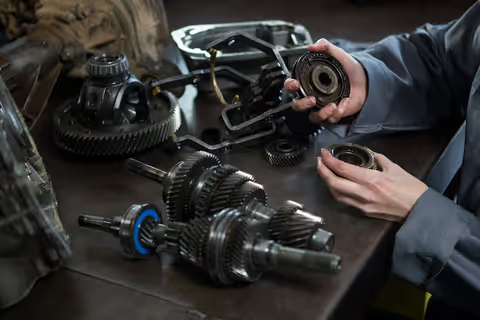
Mechanical components: bearings, gears, shafts, couplings
-
Electrical components: motors, switches, relays, control panels
-
Hydraulic and pneumatic parts: pumps, cylinders, valves, hoses
-
Electronic and automation parts: sensors, controllers, drives
-
Wear and consumable items: seals, filters, belts, gaskets
Each category has different inspection cycles, storage requirements, and technical standards. Proper classification supports better inventory organization and technical accuracy.
Common Challenges in Spare Parts Management
Despite technological progress, organizations still face several challenges when handling industrial spare parts.
-
Incomplete or outdated equipment documentation
-
Difficulty matching parts across different machine models
-
Overstocking due to uncertain demand forecasting
-
Limited visibility across multiple facilities
-
Long lead times for specialized components
Addressing these challenges often requires a combination of process improvement, digital tools, and cross-functional coordination between engineering, maintenance, and operations teams.
FAQs: Frequently Asked Questions
What are industrial spare parts used for?
Industrial spare parts are used to replace worn, damaged, or malfunctioning components in machinery to maintain safe and reliable operation.
How are spare parts different from consumables?
Spare parts are typically replaced due to wear or failure, while consumables are items used regularly during normal operation, such as filters or lubricants.
Why is documentation important for spare parts?
Accurate documentation ensures correct part selection, supports compliance requirements, and reduces the risk of equipment incompatibility.
How do industries decide which spare parts to stock?
Decisions are based on equipment criticality, failure history, lead times, and operational risk assessments.
What role does technology play in spare parts planning?
Technology supports predictive maintenance, inventory optimization, and data-driven decision-making through integrated management systems.
Conclusion
Industrial spare parts form a foundational element of modern industrial operations. They enable machinery reliability, support safety standards, and contribute to efficient asset management. As industries continue to adopt automation, digital monitoring, and sustainability-focused practices, spare parts management has evolved from a reactive activity into a strategic discipline.
Understanding spare parts categories, regulatory considerations, and supporting tools helps organizations maintain operational stability in complex industrial environments. With ongoing advancements in data analytics and predictive maintenance, the role of industrial spare parts will remain central to industrial resilience and long-term performance.