Understanding Die Casting: Types, Methods, and Industrial Applications
Die casting is a manufacturing process used to produce metal components with precise dimensions, smooth surfaces, and consistent quality. It involves injecting molten metal into a reusable steel mold, commonly known as a die, under controlled conditions. Once the metal solidifies, the mold opens and the finished component is ejected.
This process exists to meet the demand for complex metal parts that require accuracy, repeatability, and efficiency. As industries expanded beyond basic machining and sand casting, there was a growing need for faster production methods capable of creating intricate shapes with minimal material waste. Die casting emerged as a solution to these challenges, especially for non-ferrous metals such as aluminum, zinc, and magnesium.
Today, die casting plays a key role in industrial manufacturing systems where dimensional accuracy, material performance, and scalability are essential.
Importance: Why Die Casting Matters Today
Die casting remains highly relevant due to its ability to support modern manufacturing requirements across multiple sectors. It impacts a wide range of stakeholders, including manufacturers, engineers, supply chain planners, and quality control professionals.
Key reasons die casting matters include:
-
High dimensional accuracy suitable for precision engineering
-
Repeatable production quality across large volumes
-
Efficient material utilization, reducing excess metal usage
-
Compatibility with automation, supporting smart manufacturing
Industries such as automotive manufacturing, electrical equipment production, industrial machinery, and consumer electronics depend on die casting to create lightweight yet durable components. The process helps solve challenges related to production consistency, part complexity, and mechanical performance.
From an operational perspective, die casting supports lean manufacturing by reducing secondary processing and minimizing variability between parts.
Recent Updates: Trends and Developments in the Past Year
Over the past year, several notable trends have influenced die casting practices worldwide.
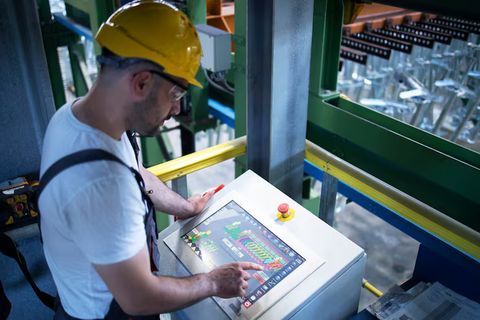
In 2025, manufacturers increasingly focused on process automation and digital monitoring. Real-time sensor integration has improved defect detection, temperature control, and cycle optimization. These advancements help reduce scrap rates and improve overall process reliability.
Another significant trend is the increased use of aluminum and magnesium alloys, driven by lightweight design requirements in transportation and industrial equipment. Research published in late 2024 and early 2025 highlights improvements in alloy flow characteristics and thermal stability.
Sustainability has also gained attention. Many facilities adopted closed-loop metal recycling systems, allowing excess material from runners and sprues to be reused without compromising metallurgical properties.
Additionally, simulation software adoption expanded, enabling engineers to model die filling, cooling rates, and potential porosity issues before production begins.
Laws or Policies Affecting Die Casting
Die casting operations are influenced by environmental, occupational safety, and industrial standards, which vary by country but share common principles.
In India, die casting facilities operate under regulations related to:
-
Industrial safety standards under the Factories Act
-
Environmental compliance guided by pollution control authorities
-
Energy efficiency initiatives aligned with national manufacturing programs
Globally, die casting is affected by policies focused on emissions control, worker safety, and responsible material usage. Many governments encourage cleaner manufacturing practices through compliance frameworks and reporting requirements.
International standards bodies have also established technical specifications for die casting tolerances, alloy compositions, and testing procedures. These guidelines support quality consistency and cross-border manufacturing compatibility.
Tools and Resources Used in Die Casting
Modern die casting relies on a range of digital and physical tools that support design, analysis, and production optimization.
Commonly used resources include:
-
Die casting simulation software for mold flow and thermal analysis
-
CAD and CAM platforms for die and component design
-
Material property databases for alloy selection and performance comparison
-
Process monitoring systems using sensors and data analytics
Below is a simplified table illustrating typical tools and their purposes:
| Tool Category | Primary Function |
|---|---|
| Simulation Software | Predict filling, cooling, and defects |
| CAD Systems | Design dies and part geometries |
| Process Sensors | Monitor temperature and pressure |
| Quality Inspection Tools | Measure tolerances and surface finish |
These tools help manufacturers improve accuracy, reduce trial-and-error cycles, and maintain compliance with technical standards.
Types and Methods of Die Casting
Die casting methods vary based on metal type, pressure levels, and production requirements.
Hot Chamber Die Casting
This method is commonly used for metals with low melting points, such as zinc alloys. The injection system is submerged in molten metal, allowing fast cycle times and efficient metal flow.
Cold Chamber Die Casting
Used for metals with higher melting points, such as aluminum alloys. Molten metal is transferred into the injection chamber before being forced into the die. This method offers better control over high-temperature materials.
Gravity Die Casting
Relies on gravity rather than high pressure to fill the mold. It is suitable for components requiring improved mechanical strength and reduced internal stress.
Vacuum-Assisted Die Casting
Incorporates vacuum systems to reduce air entrapment, improving density and structural integrity. This method is increasingly used in high-performance applications.
Industrial Applications of Die Casting
Die casting supports a wide range of industrial applications due to its versatility and reliability.
Common application areas include:
-
Automotive engine and transmission components
-
Electrical housings and connectors
-
Industrial pump and valve bodies
-
Consumer appliance structural parts
The process is especially valuable where components must meet strict dimensional tolerances while maintaining consistent mechanical properties across large production volumes.
Frequently Asked Questions About Die Casting
What metals are commonly used in die casting?
Aluminum, zinc, magnesium, and certain copper alloys are widely used due to their flow characteristics and strength-to-weight ratios.
How does die casting differ from sand casting?
Die casting uses reusable metal molds and higher precision, while sand casting uses disposable molds and allows for larger but less detailed components.
Is die casting suitable for complex shapes?
Yes. Die casting is well-suited for intricate geometries, thin walls, and detailed surface features.
What industries benefit most from die casting?
Automotive, electrical, industrial machinery, and electronics manufacturing sectors benefit significantly from die casting.
How does die casting support sustainable manufacturing?
Efficient material usage, recyclability of alloys, and reduced secondary processing contribute to sustainability goals.
Conclusion
Die casting is a foundational manufacturing process that supports precision engineering and large-scale industrial production. By enabling accurate, repeatable, and efficient creation of metal components, it addresses key challenges in modern manufacturing environments.
Ongoing advancements in automation, alloy development, and simulation technology continue to enhance the reliability and adaptability of die casting. As industries evolve and demand higher performance components, die casting remains a critical process shaping the future of industrial manufacturing.