Understanding the Importance of TNF Alpha ELISA Kits in Research
Tumor Necrosis Factor Alpha (TNF-α) is a key cytokine that plays a central role in inflammation, immune regulation, cell signaling, and disease pathways. As interest in immunology, chronic inflammation, and biomedical studies has grown, researchers needed reliable tools for measuring TNF-α levels with high accuracy.
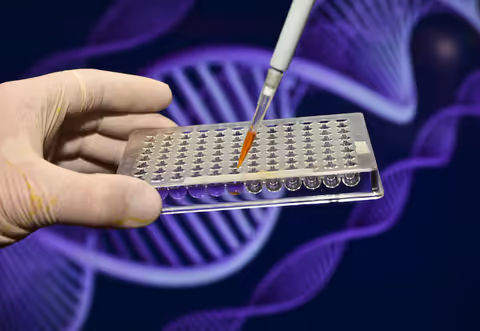
ELISA (Enzyme-Linked Immunosorbent Assay) technology emerged as one of the most widely used laboratory research tools for quantifying proteins, hormones, and biomarkers. TNF Alpha ELISA kits were developed to provide a standardized, reproducible, and sensitive method for detecting TNF-α in various biological samples such as serum, plasma, and cell culture supernatants.
Today, these kits support a wide range of scientific applications, including immunology research, clinical insights into inflammation pathways, disease modeling, and evaluation of therapeutic responses in laboratory studies. Their value comes from their precision, reliability, and ability to generate measurable data that help researchers interpret biological processes.
Importance
TNF-α is central to many inflammatory and autoimmune pathways. Understanding how its levels change in response to different biological conditions is crucial for advancing research. TNF Alpha ELISA kits matter because they enable:
Accurate biomarker quantification
They provide measurable data that help researchers track changes in inflammatory responses across different samples or experimental groups. Accurate measurement supports scientific analysis, data interpretation, and cross-study comparisons.
Insights into disease mechanisms
TNF-α is associated with conditions such as rheumatoid arthritis, inflammatory bowel disease, metabolic disorders, and immune dysregulation. Studying TNF-α levels helps researchers gain insights into disease development and progression.
Support for biomedical studies
ELISA kits contribute to laboratory workflows in cell signaling analysis, cytokine profiling, and pre-clinical testing. Their standardized format allows labs to follow consistent research methods.
Improved reproducibility in research
Because the assay format is standardized, results can be reproduced across laboratories, which enhances the reliability of scientific findings.
Use in emerging research areas
Fields such as precision medicine, inflammation modeling, and molecular pathway analysis rely on dependable biomarker detection tools. TNF Alpha ELISA kits provide the data foundation required for these advanced studies.
Recent Updates
Scientific research continues to advance rapidly, and TNF-α detection methods have evolved in parallel. Some notable trends from the past year include:
Growing interest in multiplex immunoassays (2024–2025)
Many laboratories are shifting toward multiplex platforms that measure multiple cytokines simultaneously. Although ELISA remains a gold standard for single-analyte measurement, researchers increasingly compare both methods for better data integration.
Advances in assay sensitivity (2024)
Recent kit improvements have increased sensitivity, allowing detection of lower TNF-α concentrations. This supports studies on micro-inflammatory responses and early-stage disease pathways.
Artificial intelligence in data interpretation (2024–2025)
AI-based analytical tools are being used to interpret ELISA results more efficiently. These tools help evaluate large datasets and enhance scientific insights without changing laboratory procedures.
Standardization discussions in the global research community (2025)
International scientific organizations have emphasized the need for improved assay validation and harmonization. This ensures datasets from different regions are comparable, especially in large-scale inflammation studies.
Increased use in environmental health and exposure studies (2024)
Some studies have investigated TNF-α responses in environmental exposure models, expanding the relevance of TNF Alpha ELISA kits beyond traditional biomedical fields.
Laws or Policies
Policies related to laboratory research tools vary by country, but several global frameworks influence the use of TNF Alpha ELISA kits:
Good Laboratory Practice (GLP) guidelines
Most countries follow GLP principles to ensure reliability and integrity of experimental data. TNF Alpha ELISA kits are commonly used in GLP-compliant studies because they provide standardized methods.
Ethical regulations for biological samples
Human and animal sample use is regulated through institutional review boards, ethics committees, and national research guidelines. Accurate cytokine measurement, including TNF-α detection, must follow ethical handling and documentation rules.
Import and quality compliance standards
Laboratory materials often must meet regulatory requirements from agencies such as:
-
FDA (United States) for research-use-only materials
-
EMA (European Union) for quality oversight
-
CDSCO (India) for laboratory reagent evaluation
These regulations ensure that kits entering the market meet scientific quality standards.
International harmonization initiatives
Programs supported by WHO and OECD encourage standardized assay performance to improve global comparability in immunology research.
These policies do not directly dictate how a researcher must use an ELISA kit but ensure the materials meet recognized research-quality expectations and that the generated data supports scientific integrity.
Tools and Resources
A variety of resources support researchers who work with TNF Alpha ELISA kits, from protocol libraries to data interpretation tools.
Protocol and Method Libraries
-
ResearchGate Protocols – provides community-shared steps and troubleshooting notes.
-
NIH Assay Guidance Manual – offers foundational information on assay development.
Data Analysis and Interpretation Tools
-
GraphPad Prism – widely used for curve fitting, cytokine quantification, and statistical evaluation.
-
ELISA curve calculators – online tools that help generate standard curves and concentration values.
Reference Databases
-
PubMed – large collection of peer-reviewed TNF-α studies.
-
UniProt – protein database offering detailed TNF-α structure and function information.
Laboratory Resource Platforms
-
Global antibody and cytokine databases that list validated assays and research findings.
-
Institutional laboratory management systems for recording results, data storage, and quality control.
Training and Educational Resources
-
Online immunology learning modules explaining cytokine pathways.
-
Workshops offered by academic institutions focusing on assay optimization and data interpretation.
These tools help researchers maintain accuracy, improve troubleshooting, and enhance scientific understanding of TNF-α pathways.
FAQs
What is TNF Alpha and why is it important in research?
TNF-α is a cytokine involved in inflammation and immune regulation. It is studied because abnormal TNF-α levels are associated with inflammatory conditions, infections, and immune system disorders.
How does an ELISA kit detect TNF Alpha?
The kit uses antibodies that bind specifically to TNF-α. An enzyme-linked reaction produces a measurable signal, and the intensity of this signal correlates with the concentration of TNF-α in the sample.
What types of samples can be tested?
Common sample types include serum, plasma, cell culture media, and occasionally tissue extracts. The appropriate sample type depends on the research model.
Why is standardization important in ELISA tests?
Standardization improves reproducibility, ensuring that results from different labs or experiments can be compared with confidence. It reduces variability and enhances data reliability.
How do researchers ensure accuracy when using these kits?
Accuracy is supported by proper calibration, correct handling of reagents, adherence to protocols, and the use of reliable data analysis tools.
Conclusion
TNF Alpha ELISA kits play a vital role in today’s scientific landscape by enabling accurate detection and quantification of a key inflammatory biomarker. They support immunology research, inflammation studies, and broader biomedical analysis through standardized and reproducible methods. Recent advances in assay sensitivity, data interpretation, and global standardization continue to strengthen their value in the scientific community.
As research trends evolve, TNF-α measurement remains an essential component of studies exploring immune pathways, disease mechanisms, and molecular responses. Tools, databases, and updated scientific resources allow researchers to enhance precision and maintain high-quality data, ensuring that TNF Alpha ELISA kits remain foundational in modern research.
Disclaimer: The information provided in this article is for informational purposes only. We do not make any claims or guarantees regarding the accuracy, reliability, or completeness of the information presented. The content is not intended as professional advice and should not be relied upon as such. Readers are encouraged to conduct their own research and consult with appropriate professionals before making any decisions based on the information provided in this article.